Tuesday, September 3, 2013
COLLATERALIZING SPACE: PLANETARY RESOURCES COMPANY AND ASTEROID MINING
September 3, 2013 By
Ever since the bizarre Japanese Bearer Bonds scandals, with its alleged one billion dollar Kennedy bearer bond, I have been intrigued with two notions: (1) a hidden system of finance, put into place after World War Two, and using plundered Axis loot, and (2) its use foe a variety of covert projects and operations, most of them developing black technologies deeply related to the development and exploitation of space. It was the so-called Kennedy bearer bond, in all its self-evident hoaxed nature, that caused me to think about what the hidden truth might be. There was no doubt in my mind then, and there remains none now, that in spite of its clear nature as a hoax, it was designed to send a message.
For those who don’t know about that particular bearer bond, the only examples of it are on the internet. The obverse bears, of course, a likeness of President John F Kennedy. But the reverse shows, curiously, three things: (1) the LEM, or Lunar Excursion Module, the actual vehicle of the Apollo program used to land on the lunar surface (2) the space shuttle, and (3) an image of the cratered lunar surface. The strange combination of symbols on the “bond” suggested to me that there was a hidden system of finance, and that part of that system involved the creation of vast amounts of leverage, entirely hidden, in return for a “stake in whatever was found out there.”
Succinctly put, space had been collateralized, and that almost from the inception of the space race.
Now there is further confirmation here:
Planetary Resources.com
That’s right, a corporation, complete with website, and a “team”, all about privatizing space and going out to mine asteroids and find….whatever. There is, you’ll note, even a tab labeled “asteroids,” all for themselves, another indicator of vast resources awaiting us, if we can just get to them and mine them.
But what interests me most here are the “team members,” which you can view by clicking on the site’s “Team” button. Three members in particular interest me, Dr Peter Diamandis, in the advisors category, former Air Force Chief of Staff General Michael Moseley, and in the investors’ category, Mr. Ross Perot, Jr. The last name, of course, speaks for itself as a measure of political and corporate independence. The presence of a former Air Force General suggests that the links between the developing corporatization of space and the military will be maintained, and most likely, as a two-way street of advice, intelligence, and idea-and-concept sharing. Such is to be expected. It is Dr Diamandis who most intrigues here, as the short biographical note concerning him indicates that he is “the Executive Chairman of Singularity University based in Silicon Valley.” “Singularity” is, of course, transhumanist code, and in some circles, denotes the extension and expansion of human capabilities – and presence – on a universal scale. Space, of course, would be part and parcel of such an agenda, and in this sense, the corporatization and commercial development of space would easily play into this. One gains a measure of the seriousness of this goal in yet another note contained in Diamandis’ biographical note: “Diamandis’ mission is to open the space frontier for humanity. His personal motto is: ‘The best way to predict the future is to create it yourself.’” These are serious people, so whatever NASA or other national or international space agencies may be planning, the competition from the private sector will only grow. The corporatization of space is one to watch, folks.
Ever since the bizarre Japanese Bearer Bonds scandals, with its alleged one billion dollar Kennedy bearer bond, I have been intrigued with two notions: (1) a hidden system of finance, put into place after World War Two, and using plundered Axis loot, and (2) its use foe a variety of covert projects and operations, most of them developing black technologies deeply related to the development and exploitation of space. It was the so-called Kennedy bearer bond, in all its self-evident hoaxed nature, that caused me to think about what the hidden truth might be. There was no doubt in my mind then, and there remains none now, that in spite of its clear nature as a hoax, it was designed to send a message.
For those who don’t know about that particular bearer bond, the only examples of it are on the internet. The obverse bears, of course, a likeness of President John F Kennedy. But the reverse shows, curiously, three things: (1) the LEM, or Lunar Excursion Module, the actual vehicle of the Apollo program used to land on the lunar surface (2) the space shuttle, and (3) an image of the cratered lunar surface. The strange combination of symbols on the “bond” suggested to me that there was a hidden system of finance, and that part of that system involved the creation of vast amounts of leverage, entirely hidden, in return for a “stake in whatever was found out there.”
Succinctly put, space had been collateralized, and that almost from the inception of the space race.
Now there is further confirmation here:
Planetary Resources.com
That’s right, a corporation, complete with website, and a “team”, all about privatizing space and going out to mine asteroids and find….whatever. There is, you’ll note, even a tab labeled “asteroids,” all for themselves, another indicator of vast resources awaiting us, if we can just get to them and mine them.
But what interests me most here are the “team members,” which you can view by clicking on the site’s “Team” button. Three members in particular interest me, Dr Peter Diamandis, in the advisors category, former Air Force Chief of Staff General Michael Moseley, and in the investors’ category, Mr. Ross Perot, Jr. The last name, of course, speaks for itself as a measure of political and corporate independence. The presence of a former Air Force General suggests that the links between the developing corporatization of space and the military will be maintained, and most likely, as a two-way street of advice, intelligence, and idea-and-concept sharing. Such is to be expected. It is Dr Diamandis who most intrigues here, as the short biographical note concerning him indicates that he is “the Executive Chairman of Singularity University based in Silicon Valley.” “Singularity” is, of course, transhumanist code, and in some circles, denotes the extension and expansion of human capabilities – and presence – on a universal scale. Space, of course, would be part and parcel of such an agenda, and in this sense, the corporatization and commercial development of space would easily play into this. One gains a measure of the seriousness of this goal in yet another note contained in Diamandis’ biographical note: “Diamandis’ mission is to open the space frontier for humanity. His personal motto is: ‘The best way to predict the future is to create it yourself.’” These are serious people, so whatever NASA or other national or international space agencies may be planning, the competition from the private sector will only grow. The corporatization of space is one to watch, folks.
Read more: COLLATERALIZING SPACE: PLANETARY RESOURCES COMPANY AND ASTEROID MINING
Actual female zombie attacks McDonald's drive-thru window, unleashes living dead rampage for Chicken McNuggets
naturalnews.com
Originally published September 2 2013Actual female zombie attacks McDonald's drive-thru window, unleashes living dead rampage for Chicken McNuggets
by Mike Adams, the Health Ranger, NaturalNews Editor(NaturalNews) I've long warned Natural News readers about the coming wave of real-life zombies who will maraud through the cities, smashing windows, stealing fast food and threatening to eat the faces of whatever unlucky human victims are still around.
I never thought this exact scenario would be caught on video at an actual McDonald's restaurant.
As caught on video, the drive-thru workers of a McDonald's in Toledo were attacked by an actual female zombie who leaped out of her car, clawed through the drive-thru window and began tearing at any living person in sight. She was screaming about needing "Chicken McNuggets" even though it was 6:30 am and McDonald's doesn't serve McNuggets until their lunch menu opens up.
Beating on the glass window and clutching at McDonald's employees, this female zombie uttered a series of phenomenal phrases which are now becoming the stuff of legend across the 'net. (See the video and photos below.)
Those phrases include:
"Unless you're sticking McNuggets into my hands, I don't wanna hear it!"
"Don't you ****ing run away from me you fat meatbag, I will end you!"
"Don't make me assume my ultimate form, I will ****ing wreck you!"
"I'm going to eat your ****ing face and I'm going to digest it and **** it out into the gutter!"
"I want my ****ing nuggets!"
During her zombie attack, she also emitted numerous screeching sounds including cat-like hisses and animalistic attack noises.
Zombie feeds on Chicken McNuggets
Don't you find it fascinating that the No. 1 food choice of this raging zombie is none other than Chicken McNuggets? This is the same fast food delicacy I recently exposed as containing "strange fibers" in a series of microscopy photos taken at the Natural News Forensic Food Laboratory. (See below.)Is there some yet-undocumented link between Chicken McNuggets and the living dead?
See for yourself. In this photo, you can see the female zombie leaping out of her car and attempting to force her way in through the window:

In this next photo, she manages to punch or grab a McDonald's employee:

In this snapshot, she threatens to "assume my ultimate form" which I suppose means she's going to transform into a 12-foot combat demon:

The McDonald's employees actually keep their cool through the entire attack, trying to shield their faces from the hungry McNuggets zombie just inches away:

Here, the McDonald's employees cleverly try to decapitate the zombie with the sliding glass window, which is apparently one of the few ways to effectively kill such a creature:

Not able to get Chicken McNuggets, the female zombie is more than happy to feast on human faces... as long as she gets some dipping sauce to go with it:

Unable to acquire either McNuggets or human faces for consumption, the female zombie throws a beer bottle through the window, smashing a hole in it:
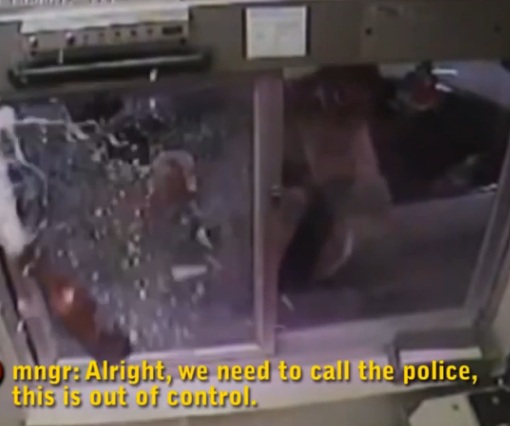
See the full video here:
For the record, here is some of what we found in Chicken McNuggets at our own Forensic Food Lab. Click here to see more images.


All content posted on this site is commentary or opinion and is protected under Free Speech. Truth Publishing LLC takes sole responsibility for all content. Truth Publishing sells no hard products and earns no money from the recommendation of products. NaturalNews.com is presented for educational and commentary purposes only and should not be construed as professional advice from any licensed practitioner. Truth Publishing assumes no responsibility for the use or misuse of this material. For the full terms of usage of this material, visit www.NaturalNews.com/terms.shtml
The Future of Healthcare in Rural California
the Sutter Health's "Regionalization" Plan

By Gregory J. Duncan, M.D.
In rural California, a David vs. Goliath battle over the future
healthcare is in its final stages. The story began in 2009, when Sutter
Health Corporation, a multibillion dollar healthcare management firm
affiliated with 24 locally owned hospitals, acted to transfer ownership
of the hospitals into regions, a process which Sutter Health termed
“Regionalization.” Under the plan, local hospital Boards of Directors
were dissolved and replaced with Regional Boards, appointed by Sutter
Health. So far, 22 local hospital Boards in Northern California were
convinced to transfer hospital ownership to Sutter Health, although in
Santa Rosa, the local hospital did so in exchange for guaranteed
representation on the Regional Board. In Crescent City, Sutter Health
executives are attempting to transfer ownership of Sutter Coast Hospital
(“SCH”) to Sutter Health’s West Bay Region. Sutter’s tactics, and
their plans for Sutter Coast Hospital, have united the community in
opposition. During
their attempt to convince the local hospital Board to transfer hospital
ownership to Sutter Health’s West Bay Region, seven executives of
Sutter Health provided demonstrably false information to the hospital
Board, County Board of Supervisors, hospital employees and physicians,
and the community at large. For example, when asked if local
representation could be guaranteed, Sutter West Bay Region President
Mike Cohill stated to the SCH Board that local representation was never
provided to local hospitals. Mr. Cohill neglected to mention the
guarantee of local representation to Sutter Medical Center of Santa
Rosa, even though it is a matter of public record that Mr. Cohill
arranged guaranteed local representation, and the paperwork bears his
signature.
During
their attempt to convince the local hospital Board to transfer hospital
ownership to Sutter Health’s West Bay Region, seven executives of
Sutter Health provided demonstrably false information to the hospital
Board, County Board of Supervisors, hospital employees and physicians,
and the community at large. For example, when asked if local
representation could be guaranteed, Sutter West Bay Region President
Mike Cohill stated to the SCH Board that local representation was never
provided to local hospitals. Mr. Cohill neglected to mention the
guarantee of local representation to Sutter Medical Center of Santa
Rosa, even though it is a matter of public record that Mr. Cohill
arranged guaranteed local representation, and the paperwork bears his
signature.Sutter Health also provided one attorney, an employed executive of Sutter Health, to provide legal advice to two different corporate entities (Sutter Health and Sutter Coast Hospital), as the SCH Board was deliberating whether to dissolve themselves and transfer hospital ownership to Sutter Health. This attorney also wrote over 1300 changes into the bylaws of SCH, which strengthened the powers of Sutter Health at the expense of SCH, and were approved by the SCH Board in a single meeting, following minimal discussion. Thus, one attorney represented two parties during the bylaws re-write and the transfer of ownership of SCH, without explaining his employment relationship to the SCH Board, nor obtaining their consent to simultaneously represent two parties during an asset transfer. The office of the California Attorney General is currently reviewing that information.
If Sutter Health succeeds in their effort to take ownership, all decision making authority of SCH will be made in San Francisco, 350 miles away. The first decision facing the SCH Board is whether to downsize the hospital by 50% to qualify for increased Medicare reimbursement under the federal “Critical Access” program. Critical Access was funded by Congress to maintain access to care in rural areas, but Sutter Health’s intended use of the program will increase costs to patients and to Medicare, while decreasing access to care. Sutter Health’s own consultant estimated 247 patients would have required emergency transfers out of Crescent City in 2011, had Critical Access been implemented. Due to SCH’s remote geography, patients are nearly always transferred by fixed wing aircraft, the cost of which averages over $40,000, and is borne by the patient.
Sutter Health claims Critical Access is necessary to stem for financial losses, but for 24 consecutive years, SCH was profitable. SCH only began reporting losses two years ago, after Sutter Health fired the hospital CFO. For over two years, SCH has operated without a CFO, in violation of the California Corporations Code and the hospital bylaws, which require SCH to employ its own CFO. In 2012, Sutter Health declared net profits of $735 million.
Every elected body in Del Norte County, including the County Board of Supervisors, City Council, Sheriff, United Indian Health Service (representing seven local Native American tribes), and over 3,000 local residents have provided written opposition to Sutter Health’s plans for their community. Nevertheless, Sutter Health refuses to listen. Despite formal requests from the Board of Supervisors, Sutter Health refuses to release SCH meeting minutes or financial data. Instead, Sutter Health arranged a “strategic options” study for SCH, and invited 15-18 local residents to participate on a confidential steering committee for the study. Despite community calls for transparency and inclusion, the steering committee composition, meeting times, places, and content, all remain confidential.
Sutter Health claims they implemented Regionalization to make their health care system “more flexible and efficient for patients,” yet Sutter Regional President Mike Cohill has been unable to offer any examples of how Regionalization improves efficiencies—Regional supply chains and centralized work centers already exist, without Regionalization. In fact, Regionalization transfers all decision making authority away from local communities and eliminates the right of local hospital Boards to negotiate management contracts with companies other than Sutter Health. Thus, Regionalization empowers Sutter Health at the expense of the hospitals Sutter has long advertised, and sought donations for, under the banner of “community based.” By eliminating choice among local Boards, Regionalization also increases Sutter Health’s control over patient care. According to healthcare attorney John Harwell, Esq., Regionalization violates California law protecting physician autonomy and self-governance. For Sutter Health, Regionalization brings control, not efficiency, over healthcare markets and patients.
_________________________________________________________________________
Gregory J. Duncan, M.D. is the Chief of Staff and Board Member Sutter Coast Hospital
Crescent City, CA. He can be contacted at drgjduncan@yahoo.com (707) 465-1126
#IDidntJoin: Stunning Photos Of U.S. Service Members Publicly Saying No To War With Syria
time to rally America ....these ass pipes in D.C. degenerate city & the elites( American/England ) wit 'their' arms UP the ass pipes asses .. are ruining U.S. Good Citizens of this Country ...stand ! Our Great,Great ,Great,Great Grand Daddy's ...Stand in the balconies of the Heavens & turn to the Rest & say those R OUR kids :) We The People ARE the reason they came to these shores ..it is U.S. ....now straighten your backs ............just stand up . America we have been sleeping fer 2 long ... rally to EACH other ................ folks America's FINEST HOUR is soon upon U.S. we can't b stopped ! 313 millions of U.S. WTF ..can't we do
 By Michael Snyder, on September 2nd, 2013
 What
do members of the U.S. military think about the possibility of a war
with Syria? So far, they appear to be overwhelmingly against it just
like the rest of the general public. In fact, a new Twitter hashtag (
What
do members of the U.S. military think about the possibility of a war
with Syria? So far, they appear to be overwhelmingly against it just
like the rest of the general public. In fact, a new Twitter hashtag (#IdidntJoin) has been flooded with messages from service members expressing their displeasure with the idea of being forced to fight for al-Qaeda in Syria. This is consistent with what we have been hearing from other sources as well. For example, U.S. Representative Justin Amash
recently sent out a tweet with the following message: “I’ve been
hearing a lot from members of our Armed Forces. The message I
consistently hear: Please vote no on military action against #Syria.”
Of course there are probably a few members of the military that would
love a war with Syria, but they appear to be very much in the minority.
Hopefully the Obama administration and members of the U.S. Congress are
listening.
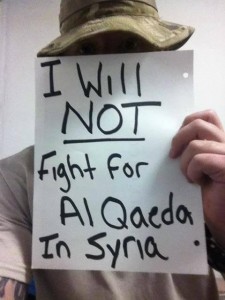
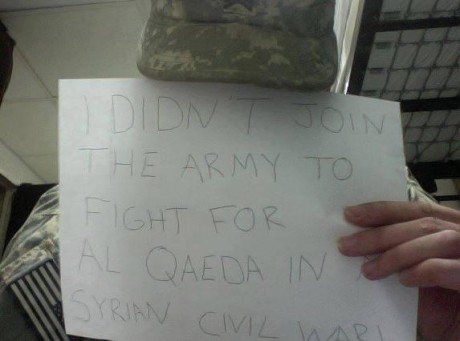
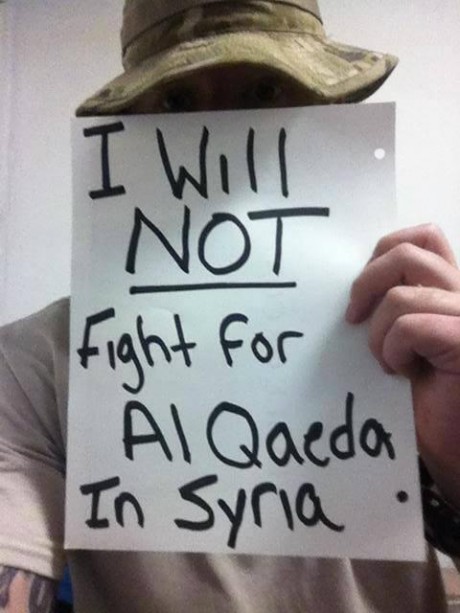
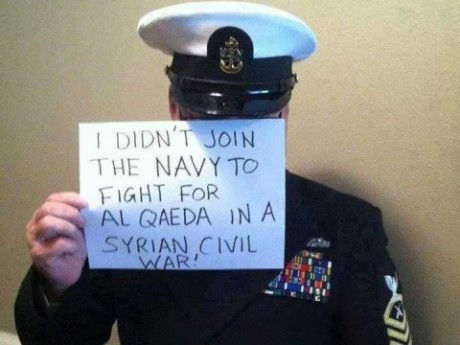
Posted below are photos taken from Twitter of American service members publicly declaring that they do not want war with Syria. In these photos they are wearing their uniforms, but they are obscuring their faces because they could potentially get in a lot of trouble for publicly defying the Obama administration.
We should applaud these brave service members for being willing to publicly take a stand like this…
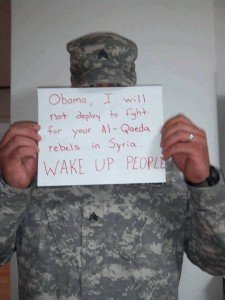
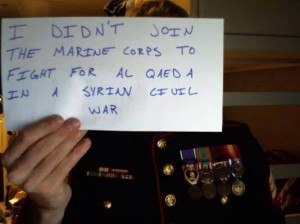
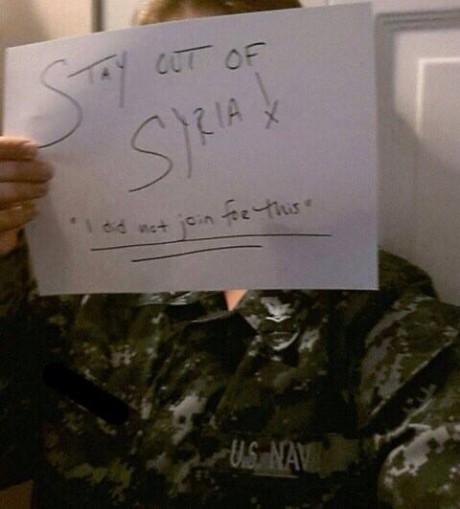
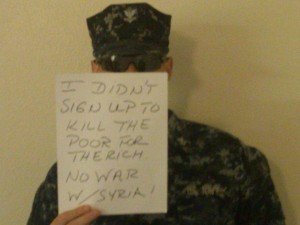
Business Insider asked members of the military to write to them and tell them what they thought about a potential conflict with Syria. 52 members of the military responded, and 50 of them were against war with Syria. The following is one example…
Anyone that believes that the Syrian rebels are the “good guys” is being absolutely delusional.
In fact, even the U.S. State Department has admitted that the al-Nusra Front is a terror organization that is affiliated with al-Qaeda. According to the State Department, they have been responsible for close to 600 terror attacks since November 2011…
Service members would have to be insane to want to go into battle allied with al-Qaeda.
Not a single drop of precious American blood should ever be shed for al-Qaeda. Unfortunately, the Obama administration seems absolutely determined to make this war happen, and so very soon members of the U.S. military will be forced against their will to fight for the benefit of al-Qaeda in Syria.
http://endoftheamericandream.com/archives/ididntjoin-stunning-photos-of-u-s-service-members-publicly-saying-no-to-war-with-syria
#IDidntJoin: Stunning Photos Of U.S. Service Members Publicly Saying No To War With Syria
By Michael Snyder, on September 2nd, 2013
What
do members of the U.S. military think about the possibility of a war
with Syria? So far, they appear to be overwhelmingly against it just
like the rest of the general public. In fact, a new Twitter hashtag (Posted below are photos taken from Twitter of American service members publicly declaring that they do not want war with Syria. In these photos they are wearing their uniforms, but they are obscuring their faces because they could potentially get in a lot of trouble for publicly defying the Obama administration.
We should applaud these brave service members for being willing to publicly take a stand like this…
—–
—–
—–
—–
—–
—–
Business Insider asked members of the military to write to them and tell them what they thought about a potential conflict with Syria. 52 members of the military responded, and 50 of them were against war with Syria. The following is one example…
“I’m a U.S. Air Force vet who spent a solid 6 years shuttling between Afghanistan and Iraq, doing everything from combat airdrops to medevacs to hauling flag-draped coffins,” wrote one servicemember in an email, who also mentioned travel to 38 countries in that time. “What we do not need is another war, and we certainly do not need any further involvement in a civil war where our objective isn’t clear, and our allies aren’t really our allies.”And it is not just the rank and file that are against war with Syria. According to the Washington Post, many among the top military brass are expressing “serious reservations” about taking action in Syria…
The Obama administration’s plan to launch a military strike against Syria is being received with serious reservations by many in the U.S. military, which is coping with the scars of two lengthy wars and a rapidly contracting budget, according to current and former officers.This is not about being “anti-war”. This is about not wanting to shed American blood in an Islamic civil war where neither side is our friend.
Having assumed for months that the United States was unlikely to intervene militarily in Syria, the Defense Department has been thrust onto a war footing that has made many in the armed services uneasy, according to interviews with more than a dozen military officers ranging from captains to a four-star general.
Anyone that believes that the Syrian rebels are the “good guys” is being absolutely delusional.
In fact, even the U.S. State Department has admitted that the al-Nusra Front is a terror organization that is affiliated with al-Qaeda. According to the State Department, they have been responsible for close to 600 terror attacks since November 2011…
“There is also a threat from terrorism, including groups like al-Qaida in Iraq (AQI) affiliated al-Nusrah Front,” says the current State Department travel warning on Syria. “Since November 2011, al-Nusrah Front has claimed nearly 600 attacks–ranging from more than 40 suicide attacks to small arms and improvised explosive device operations—in major city centers including Damascus, Aleppo, Hamah, Dara, Homs, Idlib, and Dayr al-Zawr. Public places such as government buildings, shopping areas, and open spaces have been targeted.”And even the head of al-Qaeda says that the Syrian rebels are working for his side…
The bolded language in this travel warning–emphasizing that the al Qaeda affiliate fighting in the Syrian opposition has been targeting places such as “shopping areas” was put there by the State Department in the online posting of its warning.
“During these attacks numerous innocent Syrians have been killed,” then-State Department spokesperson Victoria Nuland said at the department’s press briefing last Dec. 11.
In a statement published May 16, the State Department said that Muhammad al-Jawlani, the leader of the al-Nusrah Front, had recently “pledged allegiance to Ayman al-Zawahiri, al-Qa’ida’s leader.”
In an audio recording on Thursday, Al Qaeda’s leader Ayman al-Zawahri announced his support for the beleaguered Syrian rebels.So why would members of the U.S. military want to go put their lives on the line to help al-Qaeda take over Syria?
He framed the Syrian revolution, and the fall of President Bashar al-Assad, as necessary steps towards the defeat of Israel.
“Supporting jihad in Syria to establish a Muslim state is a basic step towards Jerusalem,” he said.
Service members would have to be insane to want to go into battle allied with al-Qaeda.
Not a single drop of precious American blood should ever be shed for al-Qaeda. Unfortunately, the Obama administration seems absolutely determined to make this war happen, and so very soon members of the U.S. military will be forced against their will to fight for the benefit of al-Qaeda in Syria.
Extensive Syrian Timeline Exposes Buildup to False Flag
Top analysts are now coming forward and agreeing that the Syrian chemical attacks were indeed committed by the Obama-backed Syrian rebels in an attempt to launch military action against Assad and Syria, confirming what we have been telling you for weeks now.
 But
even with high level thinkers like Ron Paul and Pat Buchanan declaring
that the event ‘reeks of false flag’ and was a staged provocation to
ignite war, we can look much further into what’s going on by analyzing
the news cycle. And it is through a community effort, such as what we
have now seen on Reddit,
that such a list can be compiled. The list below comes from such a
community effort with a few extra tweaks I have added, including the
addition of a * to indicate some of the most important items spanning as
far back as 2010.
But
even with high level thinkers like Ron Paul and Pat Buchanan declaring
that the event ‘reeks of false flag’ and was a staged provocation to
ignite war, we can look much further into what’s going on by analyzing
the news cycle. And it is through a community effort, such as what we
have now seen on Reddit,
that such a list can be compiled. The list below comes from such a
community effort with a few extra tweaks I have added, including the
addition of a * to indicate some of the most important items spanning as
far back as 2010.Syrian Timeline Leading Up to Staged Chemical Attacks
August 30th, 2013Rebels admit responsibility for attacks http://www.mintpressnews.com/witnesses-of-gas-attack-say-saudis-supplied-rebels-with-chemical-weapons/168135/
Aug 27th, 2013
Does President Obama know he’s fighting on al-Qa’ida’s side? http://www.independent.co.uk/voices/comment/does-president-obama-know-hes-fighting-on-alqaidas-side-8786680.html
Aug 27th, 2013
Pat Buchanan: Syria ‘reeks of false flag’ http://www.storyleak.com/pat-buchanan-chemical-attack-false-flag-operation/
Aug 26th, 2013
Russia Warns U.S. Over Syria, Says Obama Like Bush http://www.forbes.com/sites/kenrapoza/2013/08/25/russia-warns-u-s-over-syria-says-obama-like-bush/
Aug 25th, 2013
Syrian soldiers enter rebel tunnels, find chemical agents: state TV http://www.reuters.com/article/2013/08/24/us-syria-crisis-jobar-idUSBRE97N04T20130824
Aug 24th, 2013
*Russia says rebels may have staged alleged Syrian chemical attack http://www.reuters.com/article/2013/08/21/us-syria-crisis-chemicals-russia-idUSBRE97K0SB20130821
Aug 21st, 2013
Obama authorizes secret CIA support for Syrian rebels http://www.theglobeandmail.com/news/world/obama-authorizes-secret-cia-support-for-syrian-rebels/article4457317/
Aug 2nd, 2013
Al-Qaeda Backers Found With U.S. Contracts in Afghanistan http://mobile.bloomberg.com/news/2013-07-30/al-qaeda-backers-found-with-u-s-contracts-in-afghanistan.html
July 30th, 2013
*Obama to move forward with plan to arm Syrian rebels http://us.cnn.com/2013/07/23/politics/us-syrian-rebels/index.html
July 24, 2013
Al Qaeda militants flee Iraq jail in violent mass break-out http://www.reuters.com/article/2013/07/22/us-iraq-violence-idUSBRE96L0RM20130722
July 22nd, 2013
*U.S. has secretly provided arms training to Syria rebels since 2012 http://articles.latimes.com/2013/jun/21/world/la-fg-cia-syria-20130622
June 21st, 2013
Syrian rebels used Sarin nerve gas, not Assad’s regime: U.N. official http://www.washingtontimes.com/news/2013/may/6/syrian-rebels-used-sarin-nerve-gas-not-assads-regi/
May 6th, 2013
UN’s Del Ponte says evidence Syria rebels ‘used sarin’ http://www.bbc.co.uk/news/world-middle-east-22424188
May 5th, 2013
U.S. Army vet charged with firing rocket propelled grenades with Al Qaeda http://www.nydailynews.com/news/world/u-s-army-vet-fights-al-qaida-fbi-article-1.1302377http://video.foxnews.com/v/2263622958001/
March 29th, 2013
US ‘backed plan to launch chemical weapon attack on Syria, blame it on Assad govt’: Reporthttp://in.news.yahoo.com/us-backed-plan-launch-chemical-weapon-attack-syria-045648224.html
Jan 30th, 2013
U.S. ‘backed plan to launch chemical weapon attack on Syria and blame it on Assad’s regime’ http://in.news.yahoo.com/us-backed-plan-launch-chemical-weapon-attack-syria-045648224.html
2012:
*Syrian Rebels Tied to Al Qaeda Play Key Role in War – NYTimes.com https://www.nytimes.com/2012/12/09/world/middleeast/syrian-rebels-tied-to-al-qaeda-play-key-role-in-war.html?Dec 8th, 2012
Reality Check: One on One with President Obama, Why Is The U.S. Supporting Al Qaeda In Syria? http://www.youtube.com/watch?v=kE4xM9W1drI
Sept 11th 2012
Al Qaeda is seeking to manipulate tensions in the Middle East to its own advantage, warn experts http://www.thestar.com/news/world/2012/07/27/al_qaeda_is_seeking_to_manipulate_tensions_in_the_middle_east_to_its_own_advantage_warn_experts.html
July 27th, 2012
*Al Qaeda’s War for Syria http://online.wsj.com/article/SB10000872396390443343704577551281530782466.html?
July 26th, 2012
Al-Qaeda tries to carve out a war for itself in Syriahttp://www.telegraph.co.uk/news/worldnews/middleeast/syria/9396256/Al-Qaeda-tries-to-carve-out-a-war-for-itself-in-Syria.html
July 12, 2012
Stephen Harper defends aid money through unregistered Syrian charityhttp://www.thestar.com/news/canada/2012/08/14/stephen_harper_defends_aid_money_through_unregistered_syrian_charity.html
Aug 14th, 2012
Double agent led CIA, allies to terrorists, underwear bombhttp://seattletimes.com/html/nationworld/2018171295_underwearbomb09.html
May 9th, 2012
Terrorist Plots, Hatched by the F.B.I. http://www.nytimes.com/2012/04/29/opinion/sunday/terrorist-plots-helped-along-by-the-fbi.html?
Apr 28th, 2012
Al-Qaeda has likely infiltrated Syria opposition, behind recent suicide bombings: U.S. intelligence chiefhttp://news.nationalpost.com/2012/02/16/al-qaeda-has-likely-influtrated-syria-opposition-behind-recent-suicide-bombings-u-s/
Feb 12th, 2012
*Report: U.S. Bribes to Protect Convoys Are Funding Taliban Insurgents http://abcnews.go.com/WN/Afghanistan/united-states-military-funding-taliban-afghanistan/story?id=10980527
2010
June 22nd, 2010*Tony Blair on Dick Cheney: He wanted to remake Middle East after 9/11, invade Iraq, Syria, Iran http://www.nydailynews.com/news/world/tony-blair-dick-cheney-wanted-remake-middle-east-9-11-invade-iraq-syria-iran-article-1.438532#
“How can they be so good?”: The strange story of Skype
As Skype turns ten, a look back at how six Europeans changed the world.
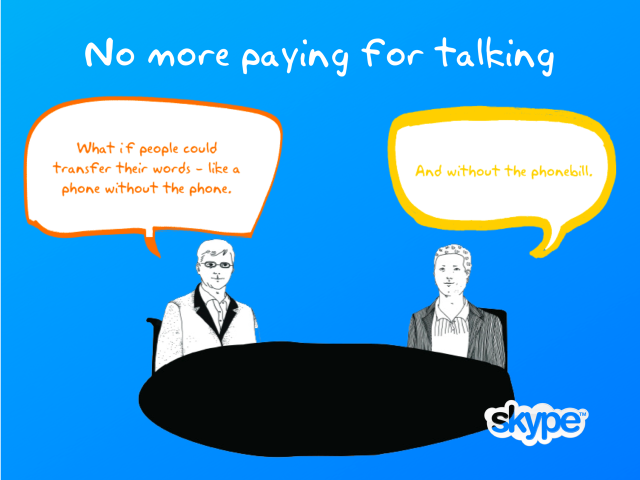
From a company powerpoint, here's an
artist’s impression of the moment when Skype's idea was fostered.
(Zennström on the left, next to Friis.)
Tallinn has five children, and he calls Skype his sixth. So why does he no longer care about his creation?
On August 29, 2003, Skype went live for the first time. By 2012, according to Telegeography, Skype accounted for a whopping 167 billion minutes of cross-border voice and video calling in a year—which itself was a stunning 44 percent growth over 2011. That increase in minutes was "more than twice that achieved by all international carriers in the world, combined." That is to say, Skype today poses a serious threat to the largest telcos on the planet. It also made Jaan Tallinn and other early Skypers rich.
But something changed along the way. Skype is no longer the upstart that refused to put signs on its offices, that dodged international lawyers, and that kept a kiddie pool in the boardroom. This is the real story of how a global brand truly began, told in more detail than ever before by those who launched it.
The roots of Skype... lie in a simple space driving game?
In the year 2000...
In 2000, as dot-com fever swept America, an entertainment and news portal called Everyday.com brought together a sextet of European revolutionaries.It began with two people from the Swedish telecom Tele2—a Swede named Niklas Zennström and a Dane named Janus Friis. Zennström was Tele2 employee no. 23; Friis worked his way up in customer service for a Danish operator.
The Swedish owner of Tele2, Jan Stenbeck, was determined to launch the Everyday portal and launch it quickly. As the Swedes were having trouble, Stefan Öberg, the Marketing Director in Tele2's Estonian office, proposed finding some Estonians for the job. In May 1999, Tele2 published an ad in a daily newspaper calling for competent programmers and offering the hefty sum of 5,000 Estonian kroons (about $330) a day—more than an average Estonian earned in a month at the time.
The work went to Jaan Tallinn, Ahti Heinla, and Priit Kasesalu—Estonian schoolmates and tech fans. They had been into Fidonet, a computer network which preceded the Internet, since the Soviet era. They started a small company, Bluemoon, which made computer games such as Kosmonaut. (In 1989, Kosmonaut became the first Estonian game to be sold abroad.) The game earned its creators $5,000 dollars, which at the time was a large sum for any Estonian. But by the turn of the century, the three friends were down to their last penny and Bluemoon was facing bankruptcy.
Short of money, they applied for and got the Tele2 job. The PHP programming language needed for the work was new to them, but the team learned it in a weekend and completed their test assignment much faster than Tele2 requested.
The last of the Skype sextet, Toivo Annus, was hired in Tallinn to manage the development of Everyday.com. The site would soon be complete, with Zennström and Friis working in Luxembourg and Amsterdam, and Annus and the Bluemoon trio working from Tallinn.
Tele2 was thrilled with the Estonians, but the Everyday.com portal failed commercially. Zennström and Friis left Tele2 and lived in Amsterdam for a while. The homeless Friis stayed in Zennström's guest room, and they turned the kitchen into a temporary office.
Together, Zennström and Friis pored over new business ideas. As the US was fascinated at the time with the scandal surrounding Napster, Zennström and Friis planned something similar. But where Napster infuriated the music and movie industries, Zennström and Friis hoped to cooperate with them. They didn't have the slightest doubt about where their new product should be created—in Tallinn, obviously. Kazaa was born.
Kazaa
Kazaa's P2P file-sharing program allowed files to be transferred directly from one computer to another without an intermediary server, thus solving one of Napster's problems. Jaan Tallinn developed the program in a nine-floor, Soviet-style brick building on Sõpruse Puiestee in the Tallinn suburb of Mustamäe. The apartment was actually Jaan Tallinn's home, and at the time, Tallinn was a work-at-home dad. (He only sold the apartment in 2012 and told me that he contemplated attaching a memorial plaque to the wall stating, "Kazaa was created here.")Kazaa, ready for service in September 2000, swiftly became the most downloaded program on the Internet. The service picked up users at the rate of one per second. Heinla, Tallinn, and Kasesalu were sipping fine wine in their headquarters and thinking, "So this is what it feels like to have half of the world's Internet traffic go through your software."
But on the business side, Zennström and Friis failed to seal a deal with US film and music companies. Kazaa was sued for enabling piracy. "Stolen" music, films, and pornography were being distributed via the application, and the Kazaa owners soon found themselves hiding from an army of ferocious US lawyers.
Zennström repeatedly dodged court summons. One time, he went to see a play at a Stockholm theater and was approached by a stranger. The individual handed Zennström's wife a bunch of flowers and held out an envelope containing a summons for Zennström. The Swede made a run for it; the summons failed to be duly delivered. He was similarly pursued in London, this time by a motorcycle, but service again failed.
 When Zennström went to Tallinn for visits with his team, he did so by
ferry as he was too scared to fly (by now he's clearly gotten over
this, as he owns a private jet and all). And once there, he remained
nervous about visitors. "When someone came in through the door and we
weren't certain who it was, Niklas would hide under the table," an
Estonian coworker reminisced.
When Zennström went to Tallinn for visits with his team, he did so by
ferry as he was too scared to fly (by now he's clearly gotten over
this, as he owns a private jet and all). And once there, he remained
nervous about visitors. "When someone came in through the door and we
weren't certain who it was, Niklas would hide under the table," an
Estonian coworker reminisced.The Bluemoon boys began encrypting all of their correspondence and their hard drives. E-mails were not stored for longer than six months. No one wanted to know more than they absolutely needed to know. Zennström changed his phone number as often as he changed his socks.
Charges were never pressed against the coders Heinla, Tallinn, and Kasesalu, but they were involved in the Kazaa proceedings as "an important source of information." A California court requested that the men be questioned and that business secrets concerning Kazaa be confiscated. At first the Estonian government rejected the request, but after a second appeal, the trio was interrogated in the presence of US lawyers.
For the Estonians, the Kazaa proceedings were like playing with fire—a little dangerous but still exciting—and their names began to pop up in the international press.
Afraid of being arrested, Zennström and Friis avoided flying to the US for several years, even though Kazaa had been promptly sold (at least on paper) to Australian businessmen, and its headquarters had been moved to the island nation of Vanuatu. The duo failed to make peace with the US for several years, and their ultimate redemption cost Friis and Zennström big money. The two eventually contributed to a more than $100 million payout for the music and movie industries.
Alberto D'Ottavi
The birth of Skype
While lawyers were still at it with Kazaa, the software's creators were already searching for a new—and less legally fraught—outlet for their P2P technology. The intellectual property Kazaa developed was safe and sound in Zennström's and Friis's company, Joltid, based in the British Virgin Islands. The idea that would eventually become Skype germinated in the summer of 2002.The team's Tallinn office was situated behind Stenbock House, then the seat of the Estonian government. On their way to work, the team kept stumbling upon their favorite spot in town, Valli Bar. The pub later attained legendary status—every new employee or visitor to Skype needed to be properly "inaugurated" at the bar. This experience included a shot of Millimallikas, a notoriously abhorrent cocktail consisting of aniseed vodka, tequila, and Tabasco sauce.
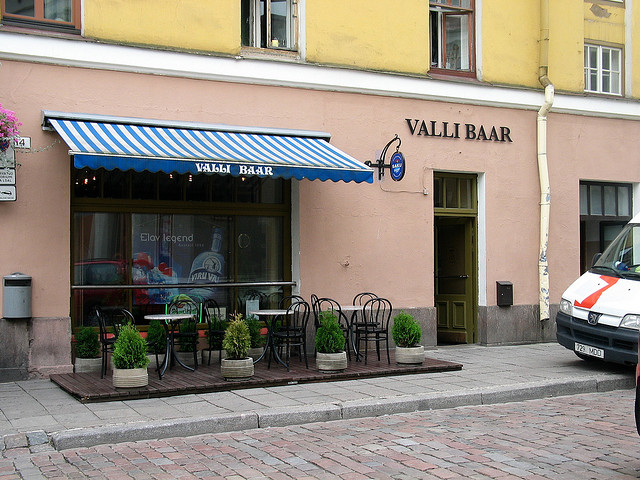
flickr user: siggimus
The name of the project originated from the words "sky" and "peer." Following the example of Napster and others, the name was shortened to "Skyper." But because the domain Skyper.com was already taken, the 'r' was shaved off. "Skype" it was.
Talking to a computer felt silly at the time—as silly as talking to your hand did when mobile phones first appeared. Feedback on the initial version of Skype was not exactly enthusiastic. The sound was glitchy, for instance. But when testers realized that they could now speak via computer to people on the other side of the world for free, attitudes changes.
Zennström and Friis never wanted to be big-time pirates or a thorn in anyone's side. However, Kazaa turned out to have done Skype a huge service. The Robin Hoods of the music and film business now pounced on the telecoms that were making hundreds of millions a year by selling long-distance calls.
Dodging international police was also deeply rooted in the new product, too. Right from the beginning, Skype conversations were encrypted and impossible to intercept. This would eventually change, but at the time it made Skype a perfect tool for criminals. When later services were offered for a fee (e.g., Skype-out), the creators soon discovered that Skype became a tool for laundering money from stolen credit cards. The company had a hard time combating this.
Others were getting into the Internet telephony game, though, and Skype's success was by no means assured. Even Estonian telecom Elion had its Netifon, which seemed better than Skype at first glance. After all, Netifon allowed users to make calls from a computer to a mobile phone. A few years later, however, Elion shut down the service as it was full of bugs and the setup was too complicated for users.
Skype did have a major advantage. Unlike other services, Skype slipped easily through firewalls. The program left no footprints on the Internet, the sound was improved dramatically, and the service worked like a charm. "Right from the start we set out to write a program simple enough to be installed and used by a soccer mom with no knowledge of firewalls, IP addresses, or other technological terms," said one of the early Skypers, Lauri Tepandi.
In 2003, Skype was listed in the commercial register of Luxembourg. Seven people controlled the company's shares: Zennström, Friis, the Bluemoon boys, Annus, and Geoffrey Prentice, an American dealmaker who drew up all of Skype's important transactions.
But they weren't making money. In the summer of 2003, Skype's development came to a halt as the company was unable to pay its developers. The question of whether to charge users a monthly fee so soon after launch would remain unresolved for some time. Zennström had unpaid bills, and the Bluemoon boys hatched a plan to name their asset management company "Borealis Kinks"—an anagram of "Niklas is broke."
On paper, the Skype business plan was not convincing enough for potential investors. As the dot-com bubble burst, the Internet appeared "dead" from an investment perspective. Yet telecoms were still going strong. Potential investors were nervous—not only about losing their money in ventures like Skype but also about having to pay legal costs. Napster was often brought up.
William Draper, an American venture capitalist, was one of the few to say that it was the right time to invest in P2P technology. His "emissary" Howard Hartenbaum was sent to Europe to make a deal with Zennström and Friis. Hartenbaum wanted to invest in the team, whatever they set out to do. It didn't matter if they had a product or not. They didn't need to prove anything. They already had Hartenbaum's and Draper's unwavering trust with Kazaa.
In the end, Draper, Hartenbaum, and some other early angels soon fuelled Skype with its first millions—and recouped their investment a thousand times over within three years.
Skype went live for the first time on August 29, 2003. The Skype team, consisting of about 20 people, celebrated this in Stockholm by watching Startup.com, a documentary about the bursting of the technology bubble.
On its first day, Skype was downloaded by 10,000 people. Within a couple of months, it already had one million users.
Funding
Suddenly, every venture capitalist began lusting after Skype. Zennström left many of them out in the cold, but $18 million was provided for Skype by a consortium of venture capitalists, including Index Ventures, Bessemer Venture Partners, Mangrove Capital, and Draper Fisher Jurvetson.Steve Jurvetson, an investor of Estonian descent, was part of the group.
"I remember wondering: how can they be so good?" he told me, speaking about the Estonian core of Skype. "How can such a small group can do so much so quickly, compared to typical development efforts in, for example, Microsoft? I had the impression that maybe coming out of a time of Soviet occupation, when computers were underpowered, you had to know how to really program, effectively, parsimoniously, being very elegant in sculpting the programming code to be tight, effective, and fast. [That's] not like in Microsoft, which has a very lazy programming environment, where programs are created that have memory leaks and all sorts of problems, that crash all the time and no one really cares—because it's Microsoft!"
Jurvetson, who had already cashed in on Hotmail, was fascinated by Skype's talented team. (Nowadays, he's busy financing anything Elon Musk lays his hands on.) Jurvetson attended Skype's Supervisory Board meetings in Tallinn and, on one occasion, brought his father Tõnu with him. (Tõnu reminisced on the Radisson hotel's rooftop terrace about his departure from Estonia 60 years before, when he had escaped the Soviet invasion during World War II.)
After the meetings, Zennström and the Americans blew off steam in nocturnal Tallinn. Late one evening, the board members embarked on a kayaking trip on the Baltic Sea during which Zennström's kayak was capsized by a wave from a passenger ferry.
In the end, the VC investments were repaid "only" 40 times over, and Jurvetson was right about the talent of the Skype team. From its $8 million, Jurvetson's firm made $300 million in less than two years.
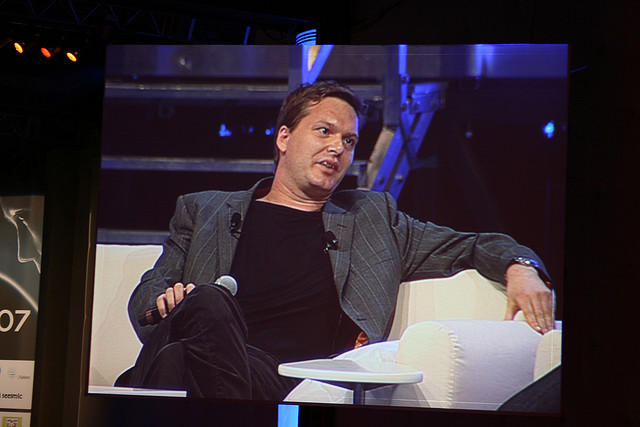
Frederik Hermann
Startup pirates
Despite the inclination to avoid international regulation, little by little, Zennström and Friis learned to "boogie" with various countries' legislation. What was prohibited in the US could be entirely legal elsewhere. Everywhere, law enforcement wanted access. In response, Skype kept a low profile; even though Skype had been an international company since 2004, its eventual offices in Estonia, London, and Luxembourg didn't even have name plates.The headquarters in Luxembourg was part a multi-story building not easily found by outsiders. It had no sign. A couple of floors up, you'd find an apartment where there was "an accountant working in the living room and another in the bathroom." Private conference calls were often made in a dark bathroom, since the fan started whirring as soon as the lights were switched on.
In London, where Zennström and Friis were then based, Skype was set up in an office with a glass wall. Behind the glass, at the other end of the corridor, a modeling agency was up and running. As the upper and lower parts of the glass wall were transparent and the middle part blurry, the mostly male employees watched mini-skirted models hurry past, seeing only heads and legs.
Corporate headquarters were officially based in Luxembourg from the beginning. One reason was that the tiny duchy had the lowest VAT rate (15 percent) in the EU, which is why all of Skype's sales passed through Luxembourg. However, Luxembourg was important to Skype for another reason: the country guaranteed a serene working environment. The duchy protects its companies and does not deliver claims or court papers. And Robert Miller, Skype's later legal adviser, would periodically go through the company's mailboxes in London and Luxembourg, removing the angry letters sent by telecom companies and government offices and shredding them without reading their contents.
"Miller is one of the few lawyers who doesn't hinder business," said Taavet Hinrikus, a former Skype employee who now works at a startup called Transferwise. "Most lawyers are all about the can'ts and shouldn'ts. Robert found ways we could... As a startup, you're a pirate anyway. It's impossible to obey every law! But when your company is the size of Microsoft, you can no longer afford not to."
However, Zennström claims that there were never any actual legal threats to Skype, except in a few countries like UAE and China. "From the beginning, I was very keen to comply with legislation and regulation, and we managed to keep Skype categorized as an electronic information provider—just like an e-mail provider rather than a telecom provider—for a long time," he wrote in an e-mail while on summer vacation sailing the Mediterranean. "That's why, for example, we never bundled Skype In and Skype Out."
Out of the kiddie pool
Until 2005, Skype operated casually. A network of people, who in many ways were free to come and go as they pleased, worked there as consultants and dealt with things they had never come across before. Ideas were programmed into a product the moment they popped into someone's mind; some coder had an idea in the morning and by the same evening it might already have 10,000 users.When the price list was being drafted for making Skype calls to telephone networks (Skype Out), its creators didn't bother with market research. Instead, two Skype employees devised the list in one night, using nothing but Excel.
After three years of operating, someone had an idea—why not draw up an annual budget?
In Tallinn, Skype occupied one room after another in its "new" office in Mustamäe—a Soviet-era block of flats turned into a house of cybernetics. Toivo Annus, who was in charge of Skype's global development, had a kiddie pool set up in one of the boardrooms and a got into a fight with the janitor about whether the pool would fall through into the basement when it was filled with two tons of water.
Every week, five to ten 10 employees joined the company. The screening system was simple and very much the product of Toivo Annus. Pass the test assignment? You're hired! Wage negotiations were often redundant—if you deserved to be in the company, you'd be paid what you needed.
Here's how casual the corporate culture was: in Silicon Valley, an American named Eileen Burbidge ditched Yahoo to come and work for Skype. She worked for free in London for eight months (she got paid later, though) and said that Skype was "the best time of her life".
"My first day I learned that I'd have to finalize my contract and terms with Niklas," Burbidge said. "Neither of us were concerned about it at that time. We were both much more interested in just getting me started and working. It was my fault for not raising this 'small admin issue' for months."
Like Jurvetson, Burbidge said that the Estonian team was able to work at the speed of light. "Having just come from 11 straight years of working in Silicon Valley, I was super impressed and actually amazed that these technical leaders seemed not to have any ego at all, didn't care about titles, didn't care about roles or pointing fingers and were all insanely committed to seeing the 'project which had turned into a company' succeed," she said. "They had a sense of responsibility and discipline that I had never witnessed before." Used to American small talk, Burbidge quickly realized it would not work in this environment.
"I was used to greeting people with a 'ping' or a 'you there?' followed by a 'how are you?,' 'having a good day?,' 'am I interrupting?,' or 'can I ask you a question?' But for Toivo all of this was superfluous and simply needless cycles. He would just reply with one word: 'Ask.'"
Skype's internal IT was just as casual. The location of the company's servers, who was being paid for them, and how much was only vaguely known to one person—system administrator Edgar Maloverjan, also known as Ets.
If the development team needed something, Ets would go to the store and wave his company credit card around. If a server had to be restarted, Ets would call the company's business partner. Sometimes they would say: "I can't—I dunno which server's yours! Besides, there's a game on."
When Ets needed server space, he Googled "data center" and "Luxembourg" and found a small service provider called Datacenter Luxembourg S.A. (Zennström and Friis sometimes joked that they didn't see why Skype needed servers at all, as everything was supposed to be peer-to-peer.) On one occasion, he even delivered servers from Sweden to Denmark in the boot of his car. It didn't matter where or how—what mattered was that Skype was working.
But as the company grew, it also acquired more professionalism. It was eventually being developed by people who the Estonians had never heard of.
The service was connected to telephone networks through the work of a Brit who happened to share his name with the pop star Michael Jackson. And Skype's visuals, trademark, language and look were all created by an ambitious young Danish designer, Malthe Sigurdsson. (He was later nominated as one of London's five most stylish men. When the Dane first arrived in Tallinn in 2003, however, Annus booked him into one of the city's worst accommodations—Tähetorni Hotel.)
Skype soon became all grown-up, and it had plenty of suitors lining up to court it. In the summer of 2005, Jaan Tallinn was often in London participating in talks with eBay, discussions that were being held at Morgan Stanley investment bank's offices. On one occasion someone jokingly said, "Hey, Jaan, are you gonna sell Skype?" Tallinn replied, "Yes, and I'll be bringing a big suitcase with me to take the money home in."
They turned out to be the words of a prophet.
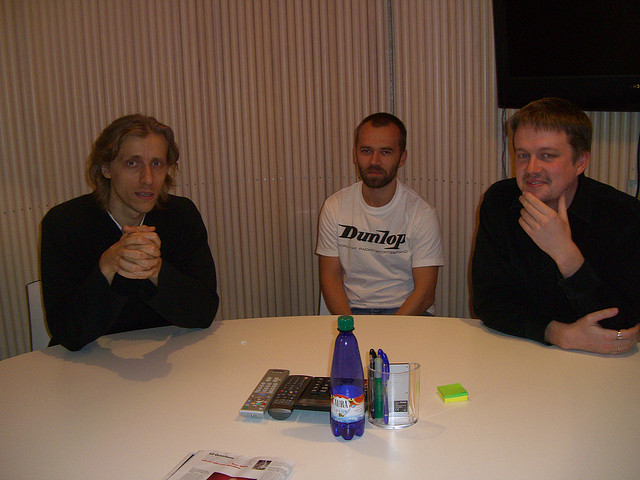
Esther Dyson
First sale
The news of Skype being sold to eBay broke in September 2005. Skype was sold for $2.6 billion. The Bluemoon boys and Annus each got about $42 million, Friis and Zennström more than 10 times as much. Another 100 people in the Tallinn office and 40 in London also had company options.Ross Mayfield, an American advisor to the President of Estonia, visited Skype's Tallinn office that day and had no idea what was going on around him. "I was struck by how the team had their heads down working like a normal workday," Mayfield said. "In Silicon Valley, everyone would be celebrating and counting their stock options. The core team had a no-nonsense focus on the work showing them the way and a real sense of purpose."
A couple of days before the news, the Estonian forces gathered at Annus' place for a briefing. Everyone had another go at calculating their options. "The atmosphere was ambivalent," remembered Kaido Kärner, a Skype engineer. "On the one hand, you had all this money. On the other, Skype used to be a value in itself. Now it was someone's property."
Jurvetson, the company's investor, did not agree to the sale and said Skype's value should be allowed to grow a little more. Its founders, primarily Zennström and Friis, were the ones who made the decision to sell.
"We kept getting offers," Jaan Tallinn said. "The question was when to start taking them seriously. Each new offer was slightly higher than the last." The fear that Skype might be past its sell-by date sped up the sale. "MSN and Yahoo had fixed their flaws," Tallinn said. "Google launched Talk the same year and started a rumor that the service enabled you to call phones for free. Calls to phones were and still are practically the only source of income for Skype.
"We saw how the risks kept on increasing; the offer was really good and would probably stop there. Besides, in summer 2005, for the first time, there was a moment when our user base started decreasing, which unsettled us quite a lot. We thought we might have a bug or something."
"In 2005, we knew that Yahoo, AOL, Microsoft, and Google were all getting into our market," Zennström added. "We had 20 million active users at the start of the year, while they each had over 100 million active users. Hence it was impossible to assess whether we were big enough to continue to be number one or if we would get crushed by one of them. Therefore we initiated strategic discussions with all of them about partnering, but it led to the same result: they wanted to either acquire us or compete. Because there were a lot of interested parties, we managed to get a very good price, so coupled with the high risk that they could all crush us, it led to the decision to sell."
Clash of cultures
When the deal was done, the Americans sent their manager Brian Sweeney to Tallinn to find out what they bought. He arrived at the Skype office and, to his surprise, everyone was quietly typing away at their computers.A call came in from the US. "What's going on there?"
Sweeney replied, "Seems like nothing's going on..."
But Estonia grew on Sweeney. The office reminded him of the early years of eBay when people were enthusiastic about their work and there was no jibber-jabber or showing off. But the sale—and continued growth—did change Skype over the next few years. The Tallinn employees eventually felt a strong divide growing between them and Skype's other offices, especially London.
One issue concerned staffing. Estonia had plenty of great engineers, but it had no brand managers. Instead of showing apprentices in Tallinn how to become masters, Skype raised an army of managers in London, while the coders remained back in Tallinn.
"In the end, I spent half of my time pointlessly arguing with these people [in London], trying to make them understand that this camel's only got one hump," said engineer Kaido Kärner, who lost his motivation to work as a result of the quarrel. "They'd been working for the company for two weeks and thought they knew how things should be done."
Zennström said in an e-mail, "We faced both engineering vs. non-engineering and also Estonian vs. Anglo-Saxon culture and communication challenges. It is always easier to have one office and one nationality, but I think our mix, while harder to manage, built a stronger company and culture."
To create a sense of solidarity, the whole of Skype's international staff was invited to let their hair down in Estonia. At a fancy costume party at Sagadi Manor, Zennström dressed up as a pirate. At another event, Annus turned up as a blue monkey (inspired by software called Bonzi Buddy), holding a carton of juice and a bottle of Viru Valge vodka.
Then in 2006, the Americans were invited to what became the craziest party in Skype's history. It took place in Pärnu at the Strand Hotel. The more conservative management from the American eBay now met the liberal Estonian startup Skype en masse. The days were filled with "corporate bullshit bingo," as some Skypers called it, where the company's plans for development were outlined. In the evening, however, it was party time. Even the Californians sometimes think back on those nights.
As the bar closed, everyone spontaneously gathered by the pool and jumped in, fully clothed. Zennström was pouring vodka for everyone—first behind the bar, afterwards on top of it. "What happens in Estonia stays in Estonia," the usually reserved Zennström promised the guests.
Those eBay representatives who went back to their rooms by the time the pool party started turned on their TVs and saw a live broadcast of the party. They were shocked.
The owner of the hotel worked out the damages the next morning and Skype covered them. Skype users would get their own special emoticon to celebrate the party.
"We were young, most of us single, with no kids or anything—and if we knew how to work, we knew how to party too," one Skyper remembers.
But the parties didn't fix the broader cultural issues. The straightforward Annus left. The new Skypers loved Microsoft Outlook, which was banned by Annus. As he put it, "If we're still sending e-mails, why did we even make Skype in the first place?"
In 2007, Jaan Tallinn sent the company's management and all of the employees a heartfelt letter called "Jaan Tallinn's million-dollar manifesto" that pointed out in detail all of Skype's technological and commercial blunders. He also promised to contribute a million dollars of his own money, provided the problems were solved.
"The people who had a start-up background all saw that things were getting out of hand and no longer being fully done," Tallinn told me. "People were focusing on things that were nice to talk about at meetings instead of what was good for users—and also that Skype kept issuing glitchy plugins that hadn't been properly developed."
Skype and eBay never meshed well. In 2011, Microsoft bought Skype for $8.5 billion.
Microsoft steps in
For the second time, Zennström and Friis cashed in on selling Skype. That's because, instead of giving eBay the critical base technology that kept Skype going (the P2P system known as "Global Index"), Zennström's and Friis's company Joltid still owned it—they simply licensed it to Skype. The whole situation devolved into threats of litigation until a 2009 settlement gave Zennström and Friis a chunk of Skype ownership, which made them even more money when Microsoft bought the company.Almost none of the people who were there when Skype started are still with the company. Decisions are no longer made in Tallinn or London but in Redmond. Soon, Skype will probably become Microsoft Skype or Microsoft Talk, the product of a massive multinational rather than a scrappy startup.
Recent revelations from Edward Snowden, the NSA leaker now granted asylum in Russia, have also shone a light on Skype's new willingness to help law enforcement. Snowden revealed, for instance, that in February 2011 eBay opened up the "spy-proof" Skype to US intelligence agencies. In order to clear up the technological and legal nuances of snooping, a secret project called Chess was conducted in Skype—a scheme only a few people in the company were aware of. That cooperation has apparently extended to Microsoft.
Taking all of this into consideration, it is no wonder many of the employees of the original Skype consider the company's upcoming tenth birthday its funeral. I call Steve Jurvetson on the other side of the Atlantic. He struggles for half an hour but cannot get Skype to work. I call his mobile. "Did Microsoft mess Skype up?" I ask him. "I wouldn't be surprised, Microsoft has messed up almost everything," he replies.
"Being owned by a large company with other business interests across the globe is a negative for Skype. A big multinational, like eBay or Microsoft, needs to accommodate business partners and governments across the globe, which limits Skype's ability to pursue growth aggressively in ways that threaten the entrenched government or business interests. For example, Skype for Wi-Fi-enabled cell phones has been delayed by pressure from wireless carriers who see their voice revenue at risk."
Will Skype even keep its Tallinn office? Microsoft has been known to shut local European offices (like those of the Norwegian Fast), but it has also kept and developed some national units (like the Danish Axapta). In 2011, Steve Ballmer said in Tallinn that the company was not just short of engineers in Redmond but elsewhere in the world as well. There's a group of development centers situated in similar time zones on a strip heading from North to South from Norway to Israel. Some creators of Skype are certain the Tallinn office will be closed; others say Microsoft might start developing other products here too. Much depends on Estonia's attitude toward foreign engineers—and right now, the country is not too open to them.

Wikimedia Commons
The next 10 years
During the lowest point of the recent global recession, a rumor spread in Tallinn that the Estonians from Skype and the people formerly involved in a giant forestry company called Sylvester were the only ones still knee-deep in cash. Skype employees half-jokingly say that Annus, Heinla, Kasesalu, and Tallinn won the jackpot.Jaan Tallinn doesn't agree, saying that he had some extra cash as early as 1999 when Tele2 paid him generously for developing the Everyday.com portal. In any event, he says that money was not a goal in itself for any of the four Estonians who helped start Skype. Having become multi-millionaires, they didn't get cocky or vain. Almost none of them bought an expensive sports car. Instead, the money was a bit of a nuisance, as it needed to be invested wisely.
The changes it brought were most visible in Kasesalu, who has cut off all his hair, shed a great deal of weight, and picked up a driver's license. The change was so drastic that his friends started asking, "Priit, are you seriously ill?"
"My life has changed quite a bit," Tallinn says now. "After Peter Thiel, I'm the second richest person in the world investing in the survival of the human race. Time is now much more valuable than money."
Annus left Skype as soon as the company was sold to eBay in September 2005. Tallinn and Heinla continued for another couple of years before resigning. Kasesalu still plays for the Skype team to this day. Zennström and Friis, of course, have made fortunes.
Today in Tallinn, those working for Skype are not exactly in high spirits. The coffee and furniture are fancier than ever at the office in Mustamäe. But the inner fire and sense of cooperation that Toivo Annus inspired in people are damped. According to one source, the company's employee surveys confirm that the number planning to quit is growing all the time.
Taavet Hinrikus, whose company Transferwise aims to revolutionize how money is transferred, said it would be a blessing if Skype eliminated its office in Tallinn. In that case, talented Estonians could do things that would be far more useful to the country than the tax revenue of few hundred high earners.
I ask Jaan Tallinn about the odds that the office in Estonia would close within a decade."
"35 percent," he said.
Zennström, however, is an optimist. He wrote, "The fact that they (Microsoft) have closed down MSN Messenger tells us that they are committed to Skype, which is one of the strongest brands in their portfolio. I hope you will e-mail me in another 10 years and want to do another story about Skype's second 10-year history."
Note: This story was originally published in the Estonian weekly Eesti Ekspress on July 25, 2013.
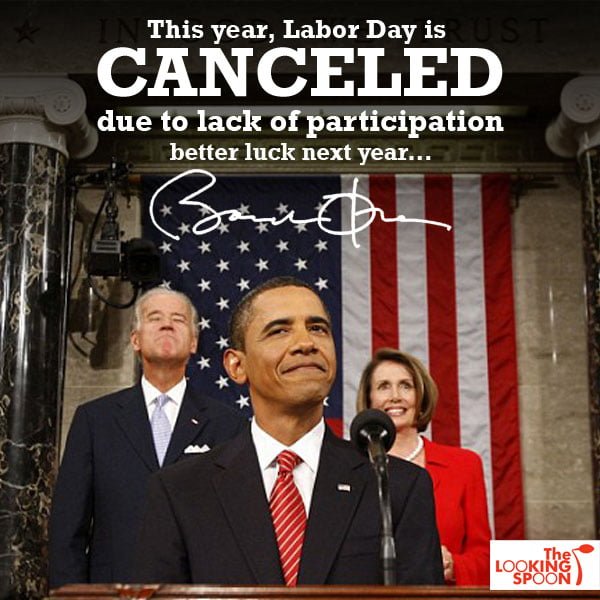 Labor Day: 90 Million Americans Without Jobs; 36% Of the Population
New Browser Tool Claims to Reveal MEGA Users’ Master Key
- September 3, 2013
 Kim
Dotcom’s Mega.co.nz launched as the ‘Privacy Company’ with a special
emphasis on the security of its users’ files. The company says that due
to encryption, no one can access a user’s files hosted on Mega unless
the user gives his permission.
Kim
Dotcom’s Mega.co.nz launched as the ‘Privacy Company’ with a special
emphasis on the security of its users’ files. The company says that due
to encryption, no one can access a user’s files hosted on Mega unless
the user gives his permission.In the wake of the NSA scandal the usefulness of encryption has really come to the forefront and MEGA is now placed to release encrypted messaging and email services utilizing similar technology. However, the company’s claims also mean that it becomes a target for those seeking to point out potential weaknesses in its system.
A few hours ago a software developer called Michael Koziarski released a new tool which he claims highlights a fundamental issue with the encryption mechanism implemented by Mega.
The software, known as MEGApwn, is a Javascript bookmarklet that runs in a web browser. Once a user is logged into MEGA it claims to reveal that user’s MEGA master key. Koziarski says that this proves that the master key itself is not encrypted and that anyone with access to a MEGA user’s computer can access it.
However, this is not the most controversial claim. Koziarski says that MEGA itself is able to grab a key and use it to access a user’s files.
“Your web browser trusts whatever it receives from MEGA, which means they can grab your master key whenever you visit their site and then use it to decrypt and read your files. You’d never know,” Koziarski explains.

“You seriously want MEGA to protect users against this?” he said.
“No, I want users to understand just how easily you could read all their files if you wanted to,” Koziarski responded.
“You mean how easily the user himself can read his own files. How exactly can an external attacker take advantage of this?” der Kolk questioned.
“So you agree MEGA is only secure against external attackers, that you can read my files if you wanted to?” Koziarski fired back.
“Are you seriously suggesting that we will serve trojaned JavaScript? Install one of our browser extensions and turn off auto-updates,” der Kolk countered.
To try and get a clearer idea of how serious (or not) this issue is, TorrentFreak contacted both MEGA and Koziarski for comment on the new tool. We are yet to receive a response but in the meantime the latter is suggesting that while any site uses Javascript for security, the highlighted problem cannot be overcome.
“Does this code hack or break into MEGA? No, it simply demonstrates one of the many serious and insoluble problems you face when doing cryptography in Javascript web applications. There are many other problems like this which is why numerous respected cryptographers have warned against doing this for years,” he concludes.
Update: Both MEGA and Koziarski are preparing answers to our questions so those will be published here as soon as we have them.
Update 2: Comments from Michael Koziarski
I made the tool because I’d noticed that people fell into one of two camps when it came to MEGA’s encryption. If they knew about the limitations of in-browser JavaScript cryptography, they understood that MEGA’s cryptography could easily be bypassed by MEGA or anyone else with access to their web servers. But users who didn’t know anything about cryptography seemed to think that there was something amazingly secure about MEGA.
By contrast, if you encrypt your files with PGP before uploading them, there’s nothing MEGA or anyone else can do to recover them. We already have the tools we need to [cure the problem].
I released MEGApwn to make it easier to show novice users how easily MEGA (or the Feds with a warrant) could circumvent the encryption if they wanted to. Everyone in the infosec industry already knew this.
As for how it works, it’s very very simple. Browsers don’t have a secure location to store sensitive data like your master key, so MEGA uses the html5 local storage API. However this data is available to anyone using your computer, or any JavaScript code running on the mega.co.nz domain. MEGApwn simply reads the key from localstorage and displays it to you.
Fundamentally the problem is that your browser will faithfully execute any code it downloads from mega.co.nz, and your browser has to download that code basically every time you visit the MEGA site.
MEGA have configured their web servers for SSL and HSTS, and don’t embed any third party code on their site, so it’s relatively secure against a 3rd party injecting code.
If they wanted to, any MEGA employee could include code which extracted your secret key and uploaded it to their servers. It wouldn’t warn you, it wouldn’t be obviously broken, you’d just never know. We know from the Hushmail case[1] that courts will issue warrants compelling them to do so in some circumstances,
When you get down to the root of the issue, MEGA’s approach to cryptography is secure if, and only if, you trust MEGA not to extract your keys[2]. From where i sit that’s not all that different from having to trust any other more traditional cloud storage provider not to read your files.
It’s important people understand that.
Update 3: Comments from Bram Van der Kolk of MEGA
We would like to thank a high-profile member of the MEGA community for highlighting two of the potential security risks associated with using computers in general and JavaScript-based cryptography in particular. All of these issues have been covered in our FAQ from the start, but we would like to use the opportunity and reiterate them here in case you have missed that:
1. If you have access to a computer, you can break MEGA (and everything else, too)
This problem is illustrated by a MEGA-specific browser bookmarklet that allows the victim to break into his or her own MEGA account. A more generalized approach is outlined in Brian Kaplan’s paper RAM is Key – Extracting Disk Encryption Keys From Volatile Memory. And, needless to say, if the victim installs remote monitoring software (such as a keylogger/screen grabber) on his machine, the potential security breach becomes pretty much all-encompassing.
2. JavaScript cryptography is weak, because the code is loaded on the fly
There are two trust issues associated with on-the-fly code loading: How secure is the delivery mechanism? And will the service provider send me trojaned code upon receipt of e.g. a National Security Letter?
2.1 JavaScript delivery
The integrity of our JavaScript code depends on the integrity of all SSL certificate issuers that your browser trusts, plus the ISPs between you and our root server cluster and/or the DNS servers involved. Or, put bluntly, “if you can break SSL, you can break MEGA”. Of course, if you can break SSL, there might be more interesting targets for you to break than MEGA…
In addition, we are continuously monitoring our root and API server SSL certificates from a variety of points around the globe. Should any breach be detected, we will immediately shut down MEGA and only resume service once the situation is clarified.
2.2 Intentional delivery of backdoored JavaScript code by us to specific users
Technically, we could serve you backdoored JavaScript code that sends your master encryption key back to us. But that would be pointless, because any such attempt could easily be detected and would completely ruin our credibility. Some juristictions force service providers to install backdoors, but MEGA will always migrate to a jurisdiction that respects your right to privacy instead of putting your data at risk. Major software vendors, e.g. in the United States, could easily be forced by their local government to abuse their update mechanisms to deliver backdoor code to specific targets. We will never provide any government with any backdoors, period.
The fundamental difference between traditional (server-side encrypting) and secure (client-side end-to-end encrypting) cloud storage providers is that the former can intercept all data of all users without the victims having a way of finding out, while the latter have to do something that is detectable on the client side.
2.3 Solutions
If you are worried about the risks outlined above, you should use MEGA in a way that does not rely on code delivered on the fly.
2.3.1 Loading MEGA’s JavaScript code base from your local machine
We offer a browser extension (currently available for Chrome, coming soon for Firefox) that holds all of MEGA’s code locally. If you install a version that someone you trust has code-audited and turn off automatic updates, we cannot backdoor you even if we wanted to.
2.3.2 Using a client application
In a similar vein, non-autoupdating client applications that were written or audited by someone you trust are immune against dynamic backdooring.
3. Untrusted JavaScript loaded from a website is still safer than an untrusted executable loaded from the same website
It is a common misperception that JavaScript is inherently insecure and that native machine code is a much better choice for cryptography. While it is true that full access to the host machine’s features allows for some additional degree of security (such as preventing keys from being sent to swap space), malicious JavaScript executing in your browser’s sandbox (assuming, of course, that no known browser vulnerabilities exist — an admittedly rather weak assumption) at least cannot take over your entire user account or, if you work as root/Administrator, system!